Web & applications
Employee management tools
I help scope employee management applications with clear staff and manager roles. Attendance, agreed work activity, reviews and reporting can be brought together around your organisation’s workflow.
Enquire about this service ↗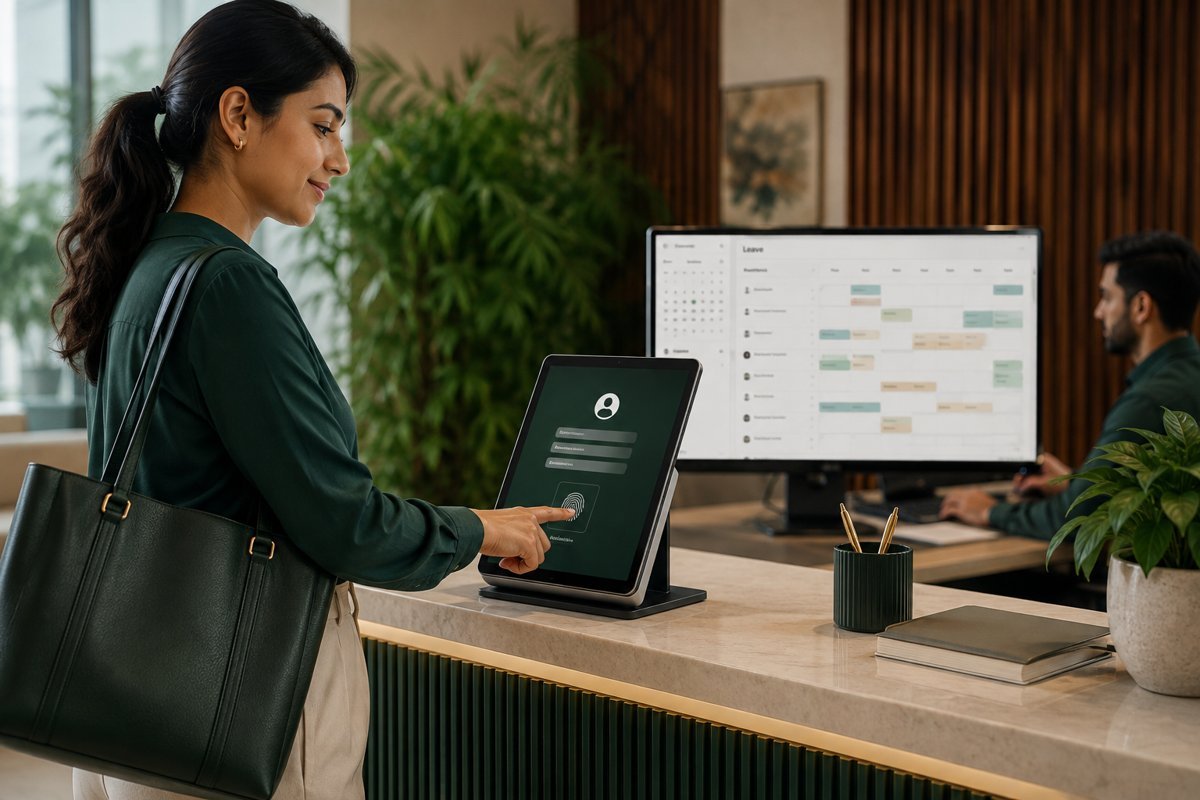
HOW I CAN HELP
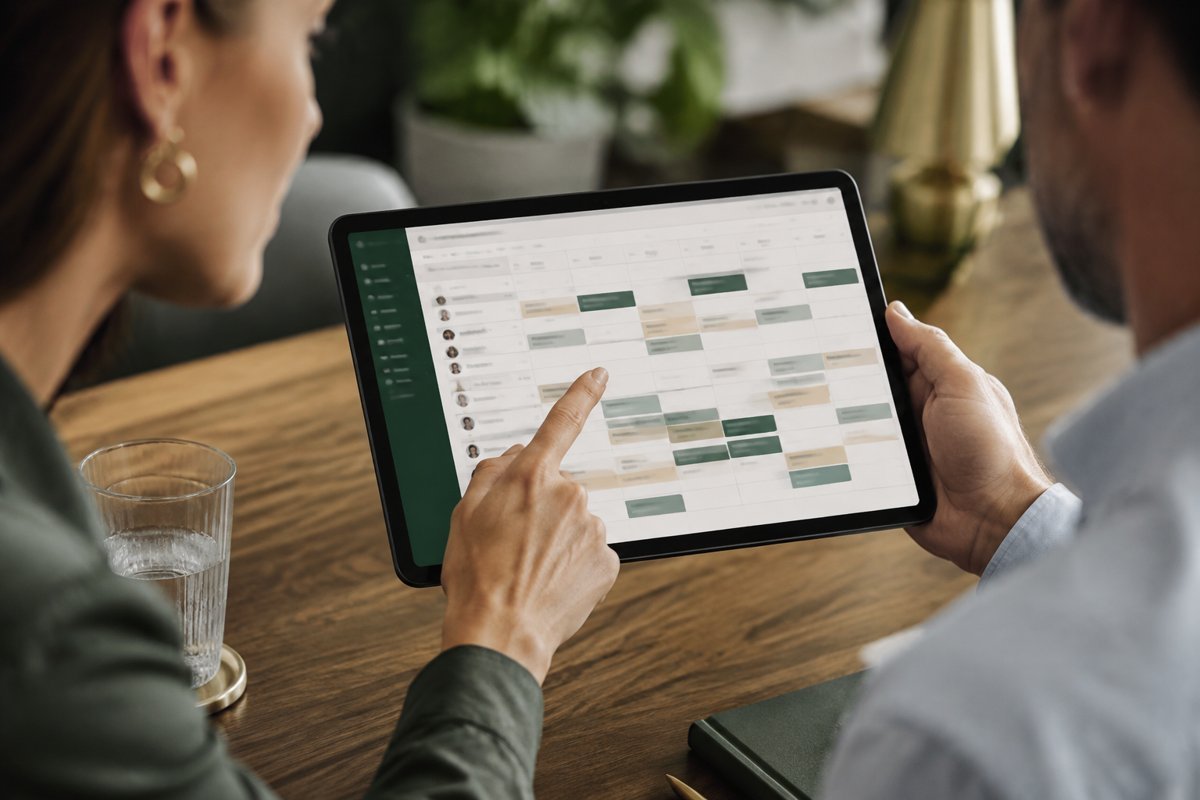
Connect attendance, activity and reviews.
Staff and manager access
Reporting and platform requirements
THE APPROACH
From the brief to a clear direction.
Yes. I can help scope attendance, leave requests, schedules, review workflows and dashboards in an employee management application.
Team size, work arrangements, reporting needs and the platforms employees use.
THE APPLICATION
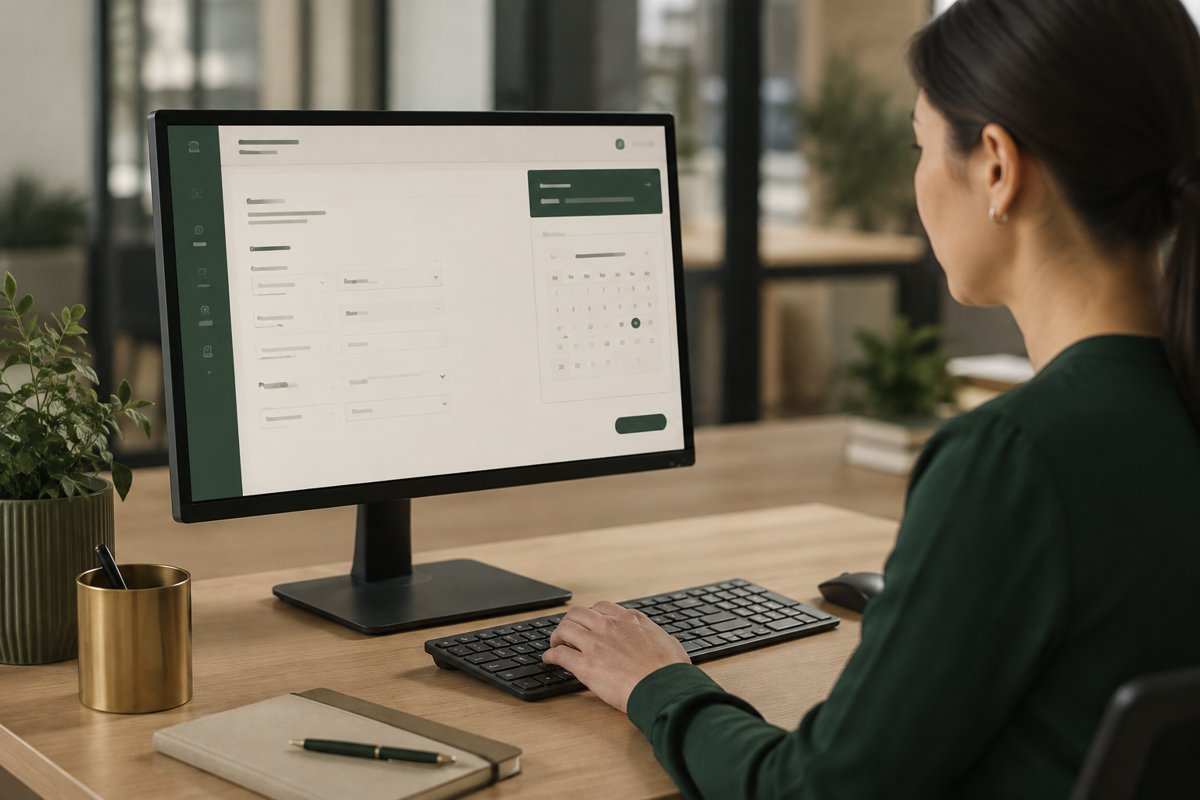
Built around the way you work.
Yes. We can define employee, manager and administrator roles, with access and visibility designed around your business requirements.
Discuss your briefEmployee management tools touch people's pay, time and performance, so they have to be right, fair and easy to explain. I help organisations decide what the system should track, who should see it, and how it fits the way their teams work, before anyone writes a line of code.
Decide what you are actually trying to manage
The phrase covers a lot of ground: attendance, leave, shifts, task activity, reviews, goals, documents and payroll inputs. Trying to cover all of it in one build is the commonest way these projects stall.
I begin by asking which problem costs you the most today. For one company it is messy leave approvals and attendance sheets. For another it is the lack of any consistent review process. For a third it is knowing what a remote or field team is working on. The first release should solve one of these properly. The others can follow in later phases on the same foundation.
I also separate what you must have from what is merely nice. Statutory or contractual requirements, such as accurate attendance records or leave entitlements, come first. Features that interest management, such as detailed analytics, come later. This keeps the first release small enough to finish and robust enough to be trusted by people whose pay depends on it.
Be wary of a project brief that lists every module on day one. Teams that start with attendance and leave, prove it works for a quarter, and then add reviews, tend to end with a better system than those that try to launch everything together. Smaller releases also give you a chance to correct course while changes are still inexpensive.
Roles and visibility come before features
The most sensitive design question is who can see what. An employee should see their own attendance, leave balance and review history. A manager should see their team, and an administrator or HR lead should see wider records. Getting these boundaries wrong creates trust problems that no feature can repair.
I define the roles in writing, along with what each can view, edit, approve and export. Edge cases get attention too: a manager who is also an employee, a person who moves between teams, someone who leaves the company and whose records must be retained but hidden. These cases are rare but they are where systems fail.
Because these systems hold personal data, I treat privacy as part of the design and not an add-on. Who may export records, how long data is kept, and how access is logged should all be decided up front. The rules that apply depend on where your employees are and what sector you operate in, so I recommend confirming obligations with your legal or HR adviser before the build begins.
Settle access rules first. Everything else in an employee system depends on them.
Attendance, leave and activity: handling them carefully
Attendance and leave are rule-heavy. Working hours, shifts, holidays, leave types, carry-over, half days and approval chains all vary by company, and sometimes by team. I gather these rules from whoever applies them today, not from policy documents alone, because the practice often differs from the page.
Where work activity is tracked, I recommend deciding openly what is measured, why, and who sees it, and telling employees before it starts. Tools that record the work people have agreed to record, such as tasks, check-ins or project time, tend to be accepted. Tools perceived as surveillance often produce resentment and workarounds.
Transparency helps adoption. Employees should be able to see their own records, understand how their leave balance is calculated and raise a correction when something looks wrong. A system that feels like a one-way window for management invites suspicion, while one that gives people visibility of their own data tends to be accepted more easily.
Reviews and feedback workflows
A review workflow is a sequence: goals are set, feedback is gathered, a manager writes an assessment, the employee responds and a conversation is recorded. The software should make that sequence easier to follow, not enforce a method your organisation does not use.
I map your current review cycle, whether annual, half-yearly or continuous, and note where it breaks down. Late submissions, inconsistent forms and lost notes are the usual culprits. The build then focuses on templates, reminders and a clear record per person. We keep scoring simple unless you have a firm reason for something elaborate.
A good review process also accounts for the awkward cases: a manager who changes mid-cycle, an employee on long leave, a team restructured halfway through the year. These are exactly the cases that make people distrust a tool when it handles them badly. I list them during scoping and decide the behaviour in advance, so the system does something sensible and predictable when they occur.
Platforms your people actually use
Employees reach these tools from very different places: a shared desktop in an office, a phone in the field, a laptop at home. The platform decision depends on that reality. A web application covers most cases, a mobile app suits check-ins and approvals on the move, and a desktop application suits tools that must run in the background or work offline.
If a desktop component is part of the picture, the desktop application page covers the extra decisions involved. I ask about operating systems, device ownership and who administers machines, since these affect installation and support.
Integration with existing systems often decides the success of the project. Attendance data may need to flow into payroll, leave into a shared calendar, and new joiners from a recruitment tool. I list each connection and decide, for each, whether it is needed in the first release or can wait. Manual export may be perfectly acceptable at the start.
What I need from you and what you receive
To scope this properly I need your team size, work arrangements, current process documents or spreadsheets, a sample of the reports you produce, and the names of people who apply the rules in practice. Payroll, legal and data-protection obligations depend on your location and sector, so I will point out where your advisers should confirm requirements rather than guess.
At the end of scoping you have a document you can use with any development team.
A short pilot with one team is worth the time. It reveals rules nobody mentioned, such as an informal swap of shifts or a special arrangement for a particular role, and it lets managers get comfortable before the whole organisation is switched over. Expect the pilot to produce a list of changes. That is the point of running it.
- Role and permission matrix for employees, managers and administrators.
- Workflow maps for attendance, leave and review processes as you want them to run.
- Report and dashboard definitions for each role.
- Platform and integration requirements, such as payroll or email.
- A phased plan with the first release clearly bounded.
When an off-the-shelf product is the better answer
Established HR products already handle standard attendance, leave and reviews well, and they include compliance updates that you would otherwise maintain yourself. If your processes are conventional, buying is usually cheaper and safer than building.
Custom work earns its place when your rules are unusual, when you must combine employee data with your own operational systems, or when the available products force awkward workarounds. I am happy to help you assess that before you commit. Delivery is quoted per project, once the scope is agreed.
If you already use a product that nearly fits, a lighter option may be configuration, a small add-on or a reporting layer on top. I will look at what you have before suggesting anything new. The aim is the least software that solves the problem, not the most that can be built.
Whichever route you choose, write down who will own the system after launch. Someone has to update leave policies, add new joiners, fix mistakes and answer questions. A tool without an owner decays, and in an HR context that decay shows up as wrong balances and lost trust. I include ownership and support in the plan, not as an afterthought.
WAYS TO WORK TOGETHER
A focused project. Or ongoing support.
Start with a strategy session. We can then agree a project brief, a focused consultation or an ongoing engagement around your priorities.
YOUR QUESTIONS, ANSWERED
Employee management tools FAQs
Scope, preparation and what happens next.
Can you include attendance, leave and reviews?
Yes. I can help scope attendance, leave requests, schedules, review workflows and dashboards in an employee management application.
Can different users have different access?
Yes. We can define employee, manager and administrator roles, with access and visibility designed around your business requirements.
What should I prepare for our first conversation?
Team size, work arrangements, reporting needs and the platforms employees use.
How are the scope and timeline agreed?
I review your requirements, starting material and target date before proposing milestones. For employee management tools, the schedule depends on complexity, review rounds and the access or assets needed.
How much does this service cost?
Start with a strategy session at ₹2,999 + GST. A digital audit starts from ₹19,999 + GST, and ongoing monthly options start at ₹50,000 + GST for SEO consulting or ₹75,000 + GST for a consulting retainer. Project delivery is scoped and quoted separately; we can choose the right arrangement for your brief.