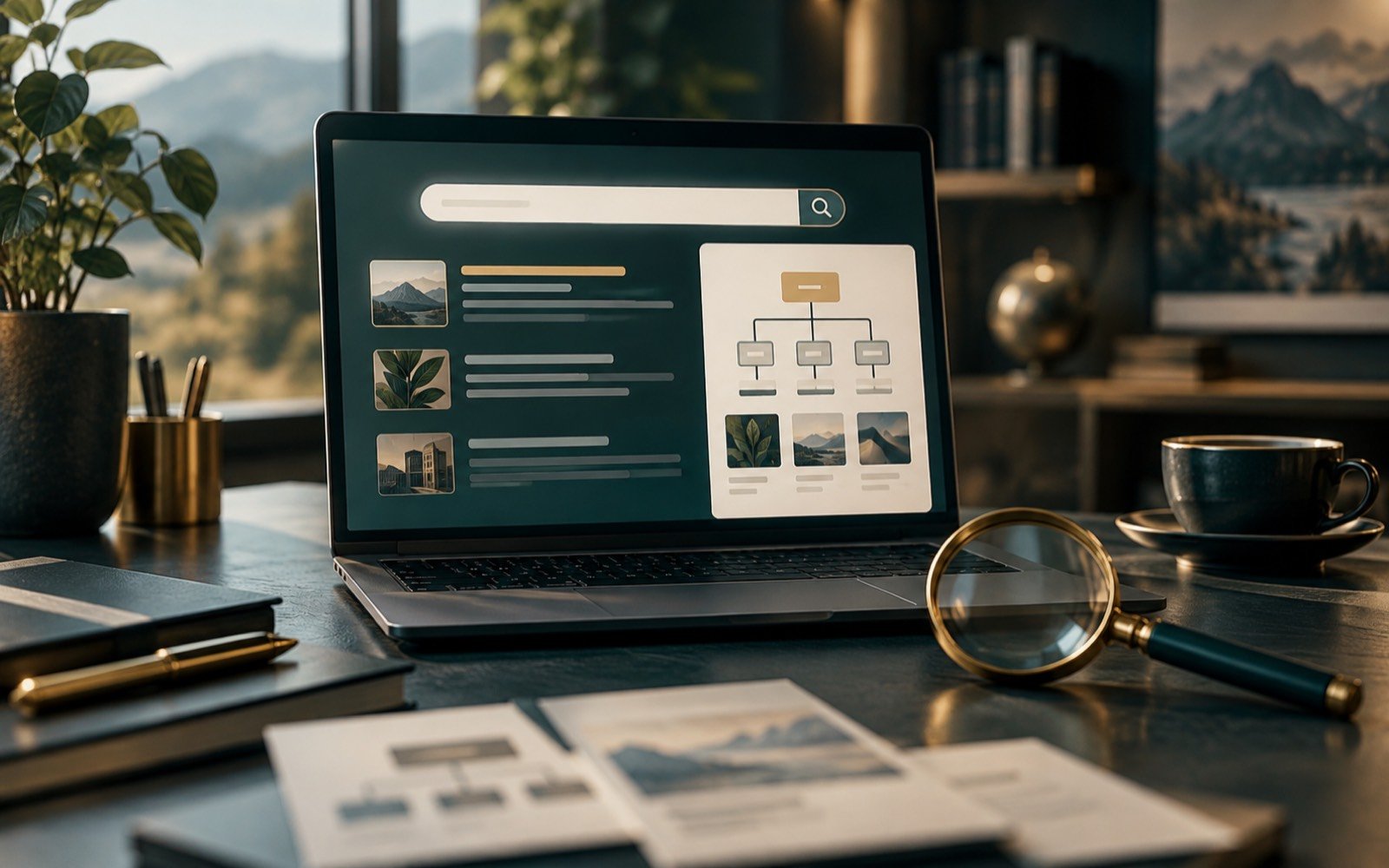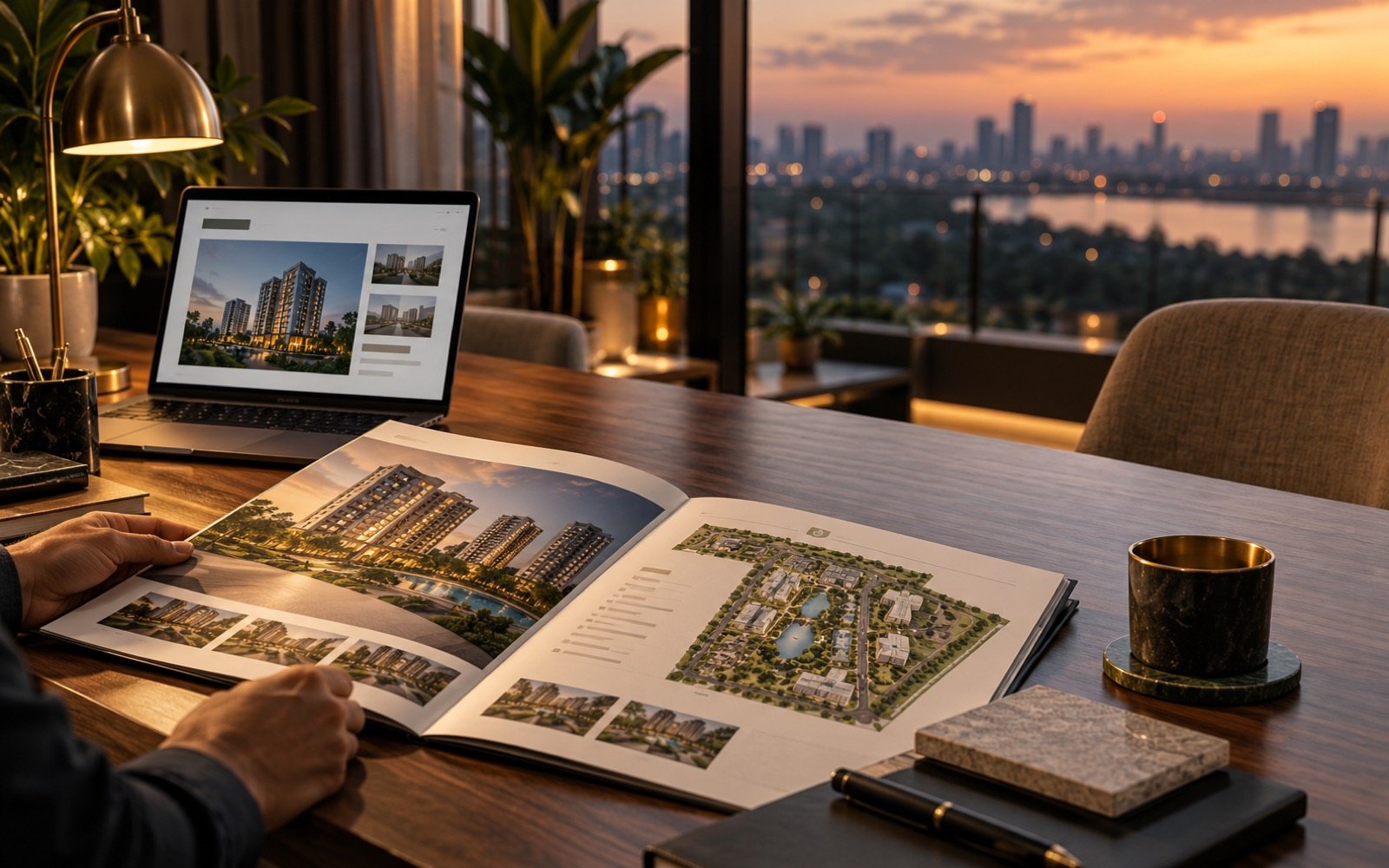
SEO for real estate in India works when your site has a properly built page for every project, location and property type buyers search for, with RERA details, real pricing logic, floor plans and fast enquiry routes on each page. It fails when everything sits on one homepage and a brochure PDF. What it costs depends on how many projects and locations you cover and how much content and technical work the site needs. As a reference, my SEO consulting starts from ₹50,000 + GST per month.
I am Kavish Arora, a digital marketing consultant in Delhi NCR with 15+ years in the field, and real estate is one of the sectors I work in most. This guide is written for developers, channel partners and brokerages who want to understand what real estate SEO actually involves, what it should cost, and where most property websites lose buyers before they ever enquire.
Why real estate SEO is different
Property searches have a few features that change how SEO should be planned:
- Searches are very specific. People search for a project name, a sector or locality, a configuration ("3 BHK"), a status ("ready to move"), and often a builder's name. Each of these needs a page that answers it.
- Projects have a life cycle. A project goes from pre-launch to launch, construction, possession and resale. Your pages need to change with it, not be deleted when inventory sells out.
- Trust decides the enquiry. Buyers are spending large sums and check RERA registration, possession timelines and builder history before they call.
- Regulation applies to your website. Under Section 11 of the RERA Act, promoters must show the project's RERA registration number and the authority's website address on advertisements, and state authorities have issued their own advertising directions and penalised omissions. Treat your project pages as advertisements. Check your state RERA authority's current guidelines, because the rules on placement and size vary by state.
- Big portals dominate many generic searches. For broad terms like "flats in Gurugram", listing portals usually own the first page. A developer or broker site wins more often on project names, specific localities, specific configurations and detailed questions.
The site structure that works
Most of the real estate SEO problems I see come down to structure. This is the page structure I recommend.
| Page type | Targets searches like | Must include |
|---|---|---|
| Project page | "[project name]", "[project name] price", "[project name] floor plan" | RERA number and authority website, configurations, carpet areas, price approach, floor plans, location map, amenities, construction status, possession timeline as registered, enquiry form and call/WhatsApp buttons |
| Location page | "3 BHK in Sector 65 Gurugram", "projects on Dwarka Expressway" | Real information about the area (connectivity, schools, hospitals, upcoming infrastructure with sources), your projects there, and an honest comparison of sub-areas |
| Configuration and status pages | "ready to move 2 BHK Noida", "commercial shops Gurugram" | Filtered lists of your relevant inventory, with links to each project page |
| Builder or company page | "[builder name] projects", "[builder name] reviews" | Delivered projects with possession details, ongoing projects, leadership, registration and contact details |
| Buyer guides | "stamp duty in Haryana", "how to check RERA registration", "carpet vs super area" | Clear, accurate answers, updated when rules change, linking to the relevant project and location pages |
What to do when a project sells out
Do not delete the page. A sold-out or delivered project page still gets searched by residents, resale buyers and people checking your track record. Mark it as delivered, keep the details, add possession information, and link to your current projects in the same area. Deleting it throws away the trust and search history the page built up.
Brochures and PDFs
Many property sites put all the useful detail in a downloadable brochure and leave the page nearly empty. Google can read some PDFs, but a page with the details written out in HTML is far easier for search engines and AI assistants to understand and quote. Keep the brochure as an extra, not a replacement.
On-page basics for property pages
- Unique content per project. Do not copy the same amenity list and "luxury living" paragraph across every project. Write what is actually different: tower count, unit sizes, orientation, distances to real landmarks.
- Carpet area stated clearly. Buyers search for it, and RERA frames sale in terms of carpet area. Be precise.
- Prices handled honestly. If you cannot publish a fixed price, give a starting range with what it depends on (tower, floor, view, payment plan), and a clear "updated on" date. Pages that say only "price on request" lose searchers to pages that answer.
- Images with sense. Compress large renders, add descriptive alt text, and label renders as artist's impressions where they are.
- Structured data where it fits. Organisation and breadcrumb markup are straightforward. Use other schema only where it accurately describes the page.
- FAQs from real enquiries. Ask your sales team for the ten questions they hear most. Answer them on the project page. Clear answers like these also make your pages easier for AI assistants to quote.
Technical issues common on property sites
Real estate websites are often built for launches, with heavy visuals and little thought for search. The usual problems I find:
- Very slow pages on mobile because of uncompressed renders, autoplay video and walkthrough embeds.
- Separate microsites for each project on different domains, splitting authority and making each one weak.
- Project pages built as one long image or slider with almost no readable text.
- Old launch landing pages left live with outdated prices or "pre-launch" offers.
- Filters and listing pages creating thousands of near-duplicate URLs.
- Forms that work on desktop but break on mobile, or send leads to an inbox nobody checks.
If several of these apply, start with a technical review before writing more content. My technical SEO service covers this.
Local SEO for site offices and brokerages
Every staffed sales office or brokerage office that receives visitors can have its own Google Business Profile. Keep the name as it appears in the real world. Do not add "best flats" or a locality to the name, and do not create profiles at addresses where nobody receives customers. Ask every visitor and buyer for an honest review in the same way, without incentives; Google's policies forbid incentivised or selectively requested reviews. My Google Business Profile checklist covers this field by field.
Leads: where real estate SEO usually leaks
SEO for property is only worth paying for if enquiries are handled. The gaps I see most often:
- No call or WhatsApp button visible on mobile without scrolling.
- Forms asking for too much before the buyer has any information.
- Organic leads mixed in with portal and ad leads, so nobody knows which source produced site visits or bookings.
- Slow follow-up. A buyer who enquires on three projects on a Sunday evening tends to visit whoever called back first.
Tag every lead with its source in your CRM, track form submissions and calls in GA4, and review organic leads separately once a month. Use consistent UTM tags on links from portals, ads and WhatsApp broadcasts.
What real estate SEO costs in India
There is no honest single number, because the work varies so much. What drives the cost:
| Cost driver | Why it matters |
|---|---|
| Number of projects and locations | Each needs its own properly built page, and keeping them updated |
| State of the website | A slow, image-only site needs technical fixes or a rebuild before content helps |
| Content volume | Location pages and buyer guides take research and writing time |
| Competition in your micro-markets | Busy corridors with many developers take more effort than a smaller city |
| Who does the work | Strategy and direction only, or hands-on execution as well |
For reference, my own fees: an audit is ₹19,999 + GST, an audit with a roadmap is ₹49,999 + GST, and ongoing SEO consulting starts from ₹50,000 + GST per month. Hands-on execution, where my team does the work, starts from ₹2,50,000 + GST. The full breakdown is on my SEO consulting fees page, and SEO consultant cost in India explains how to compare quotes.
Be careful with packages that promise a fixed number of "keywords on page one" or a set count of backlinks per month for property sites. Neither tells you whether buyers will find your project pages or enquire.
How long it takes
It depends on the age and condition of the domain, how competitive your locations are, and how quickly pages get built and fixed. Project-name searches can improve sooner once a proper page exists; broad locality searches take longer. For projects launching soon, SEO should run alongside paid campaigns, not replace them.
A practical starting order
- Fix tracking so you can see organic enquiries separately.
- Fix speed and mobile usability on project pages.
- Build or rebuild one complete page per active project, with RERA details placed as your state authority requires.
- Add location pages for the micro-markets you actually build or sell in.
- Set up and clean Google Business Profiles for staffed offices.
- Add buyer guides based on real sales questions.
- Keep delivered project pages live and updated.
More on how I work with developers and brokers is on my real estate page.
Frequently asked questions
What is the cost of real estate SEO in India?
It depends on the number of projects and locations, the condition of the site, content needs and competition. My SEO consulting starts from ₹50,000 + GST per month, and hands-on execution from ₹2,50,000 + GST. A one-time audit at ₹19,999 + GST is a sensible first step if you are unsure what the site needs.
Can a developer website outrank property portals?
On broad searches like "flats in [city]", portals usually win. On project names, specific localities, configurations and detailed buyer questions, a well-built developer or broker site can compete. Focus on the searches where your site is the most relevant answer.
Should each project have its own website?
Usually no. Separate microsites split authority and multiply maintenance. Project sections on your main domain are generally stronger. There can be exceptions for joint ventures or brand reasons, but decide on purpose, not by habit.
Do RERA rules apply to my website and SEO pages?
Section 11 of the RERA Act requires the registration number and authority website on advertisements, and state authorities treat promotional material broadly. Show RERA details on every project page, follow your state authority's current guidelines, and take legal advice if you are unsure.
Is SEO or paid ads better for a new launch?
For a launch in the next few weeks, paid ads reach buyers faster. SEO builds pages that keep producing enquiries through the project's life and after. Most developers need both, planned together.
Next step
If you want an outside view of your property website before you commit to a retainer, book a 30-minute strategy session (₹2,999 + GST). I will look at your project pages, tracking and lead flow and tell you plainly what to fix first.